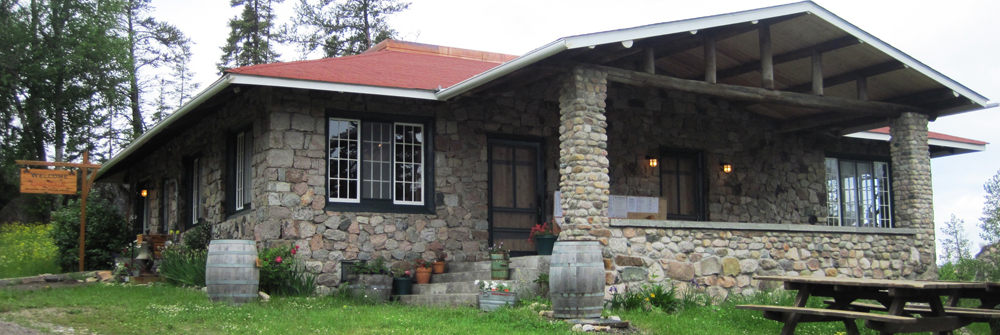
Today the ol’ west wind has been blowing the golden aspen leaves past the Chik-Wauk windows. It’s been a beautiful autumn.
In the shady areas you can still find clumps of asters and pearly everlasting.
We’ve passed the autumn equinox and the nights are growing longer while the days grow shorter. The golden and red leaves filter the evening and morning sunlight.
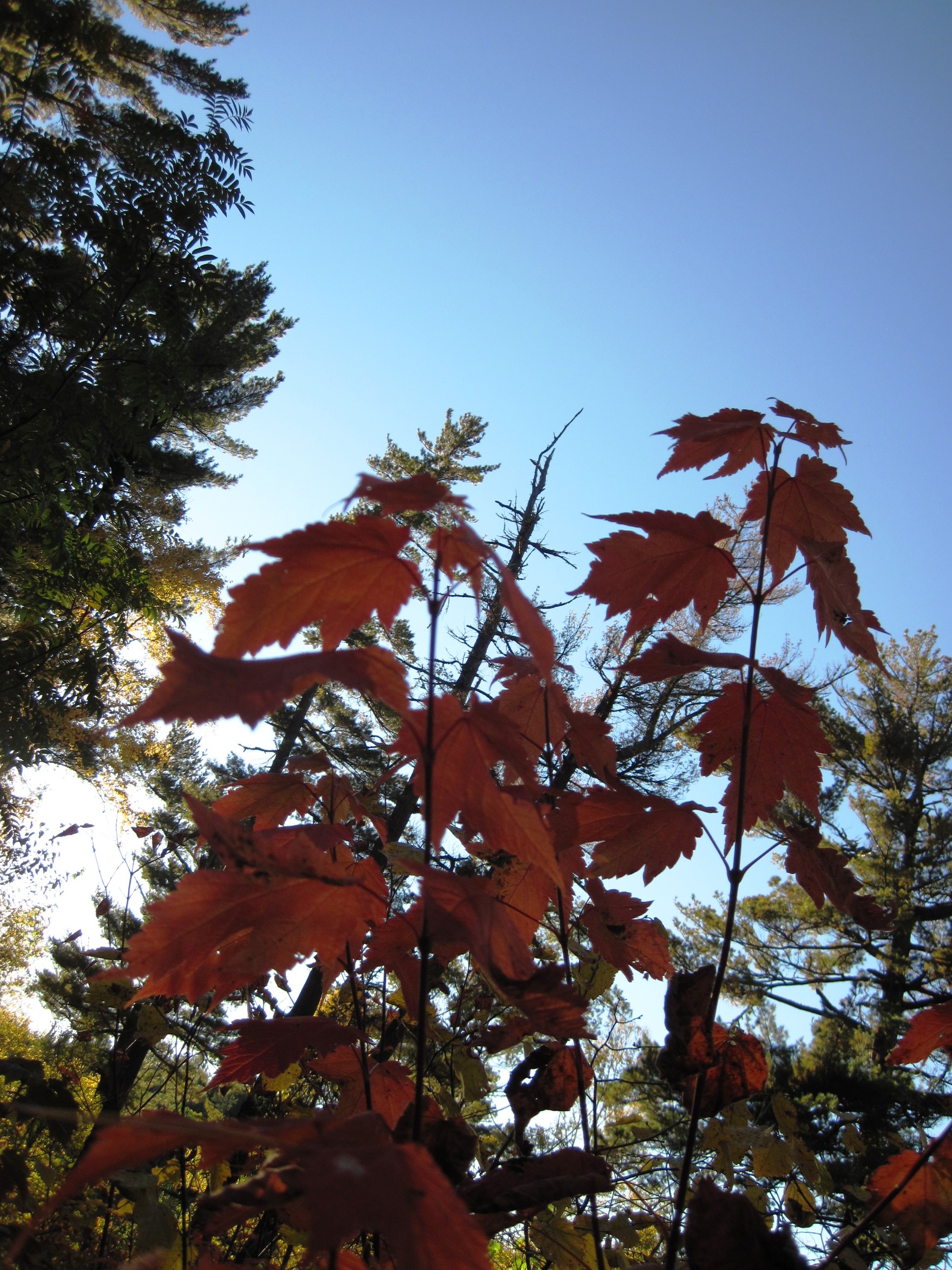
The moose maple has turned crimson.
While fall seems to be making its last stand in the Gunflint Trail forest, Chik-Wauk’s still open until October 17th. Come see it as we make the graceful transition from autumn to winter.
If the inclement weather of late has you escaping to Chik-Wauk, you might be tempted to wrap up in some of the weaving on display in the gift shop.
Three very talented local weavers have their weaving for sale at Chik-Wauk.
Doris Durey spends her summers on the Gunflint Trail. She has a number of scarves for sale at Chik-Wauk, including a collection of tartans which reflect her Scottish heritage. She holds a Master of Fine Arts with an emphasis on weaving from the East Tennessee State University.
Annie Greeno can often be founding fishing on a Gunflint Trail lake, winter or summer. When she’s not fishing, she’s weaving rugs on her 60-year-old loom which she purchased from the previous owners of Tuscarora Lodge.
Lennie Sobanja has operated Sugarbush Fiber Arts since 1994 on Maple Hill, just outside of Grand Marais. She learned weaving in Stockholm, Sweden in 1977-78. She weaves a wide variety of items, including place mats, blankets, rugs, curtains, and table clothes. Currently one of each her rugs and blankets can be found at Chik-Wauk.
The Gunflint Trail Historical Society needs your help!
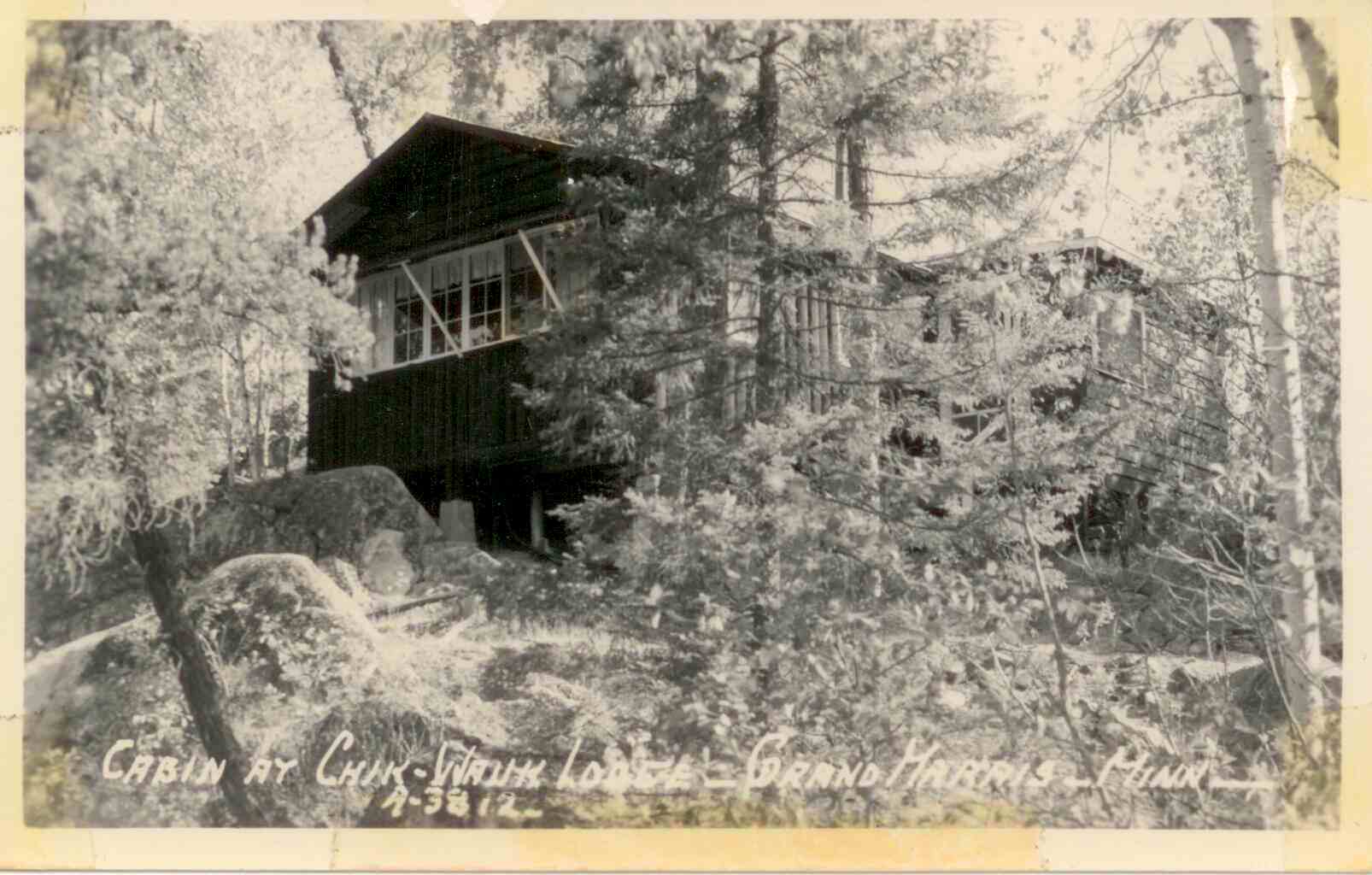
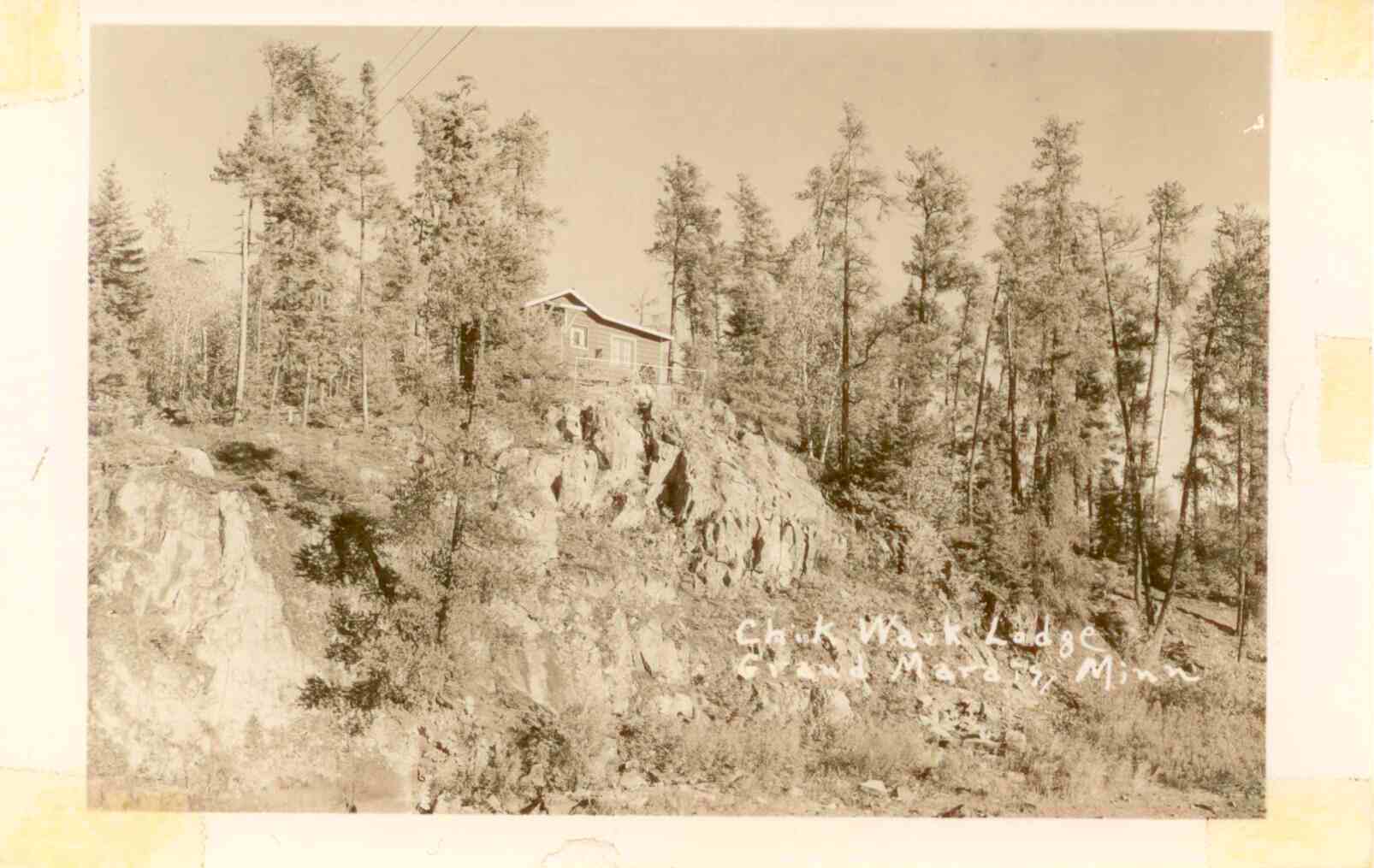
The Historical Society is currently in possession of an original Chik-Wauk cabin which stood on the property back when Chik-Wauk Lodge was in business. The cabin is in pieces and the plan is to reassemble the cabin in its original location on what is now Chik-Wauk Museum and Nature Center property. Once the cabin is standing again, the GTHS will outfit it to appear like a typical 1950s-60s rental cabin which museum guests can visit.
But we have some questions. . . .
When Chik-Wauk Lodge sold to the federal government, the government auctioned off all the buildings on the property except for the lodge. The buildings were taken down and the winning bidder got to take their building home in pieces. But no one seems quite sure when that auction was held . . .
In addition, the people who bought the GTHS’s cabin never reassembled the building. We’re wondering if there’s any one lurking out there who might have bought one of the other 10 Chik-Wauk cabins at the auction. If so, we’d love your insight on the best way to go about reconstructing the cabin we have.
Do you know when that auction was held? Do you have one of the cabins? Do you know how the cabins were constructed and how we might go about reassembling one?
If you have any answers to our many questions we’d love to hear them. Leave us a comment or send us an email at info@chikwauk.com. We’d be thrilled for any information you might have to offer.
We’re hoping it won’t take all the king’s horses and all the king’s men to put this cabin back together again!
The sight of a ruffed grouse (Bonasa umbellus) alongside a gravel road is such a common sight on the Gunflint Trail that residents sometimes forget that for visitors, it’s not every day that you see chicken-sized birds running all over the place.
All season long, a ruffed grouse family has been on the loose on the Chik-Wauk grounds. They’ve grown up from little chicks into small adults who are often seen strutting across the driveway when you turn into Chik-Wauk. This ubiquitous fowl can be disarmingly friendly — the one in the picture up crept right up to the Chik-Wauk volunteer taking the picture– but more often than not, an encounter with a grouse is nothing more than the flapping rumble of wings and flash of tail feathers as the bird escapes to the forest’s cover.
The grouse population, which is estimated based on the number of “drums” (when males flap their wings to attract a mate) heard in the spring, works in 10 year cycles. The population peaked last year, but there are still plenty of grouse to be seen this autumn. Even in the lowest population years, Minnesota is considered the best ruffed grouse state in the U.S.
Ruffed grouse are associated with aspen trees. Young aspen groves protect grouse from their predators: owls and groshawks. Aspen, which is notorious for taking off in forest areas that have been clear cut or disturbances, has been prevalent along the Gunflint Trail following the 1999 blowdown storm and the wildfires which followed.
You might also run into a spruce grouse (Falcipennis canadensis)while out on the back roads near the Gunflint Trail. This bird, who breeds in the Boreal Forest, is of similar size as the ruffed grouse but slightly less common than its ruffed cousin. You can tell it apart, the males at least, but the red streak above their eye.
Last night, Chik-Wauk Museum and Nature Center was honored to receive a Preservation Award for “community effort” from the Preservation Alliance of Minnesota. Betty Hemstad, the first president of the Gunflint Trail Historical Society accepted the award last night at Laird Norton Addition to the Winona County Historical Society in Winona.
According to the Preservation Alliance of Minnesota website, over the past 26 years, nearly 300 projects across the state have received recognition through the Minnesota Preservation Awards program in the categories of adaptive reuse, addition/expansion, advocacy, archaeology, career achievement, community effort, education/interpretation, emerging leader, preservation planning, restoration/rehabilitation, stewardship, and sustainable design. A new recognition area for preservation publications was added this year to the education / interpretation category. Awards are presented not on the basis of size or investment, but rather on the merit they provide to their community.
Hard to believe that in just five years, Chik-Wauk went from looking like this:
To looking like this:
We couldn’t have done it without hundreds of volunteers and countless volunteer hours. Thanks too to all our visitors — all 9000 of you! — who have made Chik-Wauk Museum and Nature Center a success!
A walk through Chik-Wauk Museum can get you thinking about the Gunflint Trail’s history. Luckily, just eight miles back down the Gunflint Trail, is a 3.3 mile hike that highlights historic events on the Gunflint Trail more than a century ago. The Centennial Trail was constructed last year by the U.S. Forest Service to commemorate the centennial of the Superior National Forest. The Trail follows parts of the Port Arthur, Duluth & Western Railroad, a Canadian railroad that crossed into the United States at the Gunflint Lake Narrows to access the Paulsen Mine.
Before the emergence of the resort industry along the Gunflint Trail, people spent a lot of time hoping to find their riches in the area. The Paulsen Mine was one such attempt. Prospectors had hoped to extract iron ore from the Gunflint Lake region and make their fortune. As it was, only one train load of iron ore was ever removed from the mine. However the test pits are still visible along the Centennial Trail today.
Tomorrow, as part of the Taste of the Gunflint Trail festivities along the Trail, USFS interpreter Steve Robertsen will be offering a guided hike of the Centennial Trail. You can meet Steve at the Centennial/Kekekabic Trail at 3:00 tomorrow (Saturday, September 11). Bring decent footwear, a water bottle, and be prepared for the hike to take approximately 2 hours. What a great way to cap off a day of history on the Gunflint Trail!
There are always lots of good reasons to drive up the Gunflint Trail: possible wildlife sightings, scenery, a visit to Chik-Wauk Museum and Nature Center . . . . But this Saturday, September 11th, there’s an especially good reason to drive up: from 11 a.m. to 5 p.m. several businesses along the Trail will be cooking up recipes from the Taste of the Gunflint Trail cookbook and hosting open houses. You can swing by any of the following businesses for a “Taste”:
Bearskin Lodge
Golden Eagle Lodge
Poplar Creek Guesthouse B&B
Clearwater Lodge & Outfitters
Hungry Jack Outfitters
Trail Center Restaurant
Nor’Wester Lodge & Outfitters
Gunflint Lodge
Chik-Wauk Museum and Nature Center
Voyageur Canoe Outfitters
Here at Chik-Wauk you’ll find a pie and ice cream social and book signing with several Gunflint Trail authors. The event is a fundraiser for the new boardwalk nature trail we’re planning to put in this fall.
If all the eating has left you feeling a bit full, you might want to take part in the guided hike of the new Centennial Trail at 3 p.m. Those interested in the hike are to meet U.S. Forest Service interpreter Steve Robertsen at the Kekekabic/Centennial trailhead (located 8 miles south from Chik-Wauk along the Gunflint Trail). The hike is expected to take approximately 2 hours and hikers are asked to wear decent footwear and pack some water. The Centennial Trail, a 3.3 mile loop, was constructed last year and follows the bed of the old PAD&W railroad and passes by several pits from the Paulsen Mine. The trail’s a great walk through Gunflint Trail history and a great way to close a day on the Gunflint Trail.
With the windy days this last weekend, the hum and moan of chainsaw has been a familiar noise in the woods around Chik-Wauk as volunteers worked to clear the nature trails of downed trees. The decided autumnal weather that has blown in has minds thinking about the upcoming winter and many people are splitting and stacking firewood in preparation. No doubt a few fires have been lit in fireplaces this chilly Labor Day weekend!
The forest of the Gunflint Trail have always been a vital part of this region. Years ago logging railroads meandered through the woods and loggers used the winter months to skid timber out of the woods. The logging of the region continues to this day, having evolved into modern sustainable practices from the great pine logging of the turn of the 20th century.
You can find much information on the logging of the Gunflint Trail in the Chik-Wauk Museum. Check out the logging exhibit, the pioneer profile video on Andrew Hedstrom (the founder of Hedstrom Mill, which is still operation today) or the information on the industry on the shelves of Chik-Wauk’s library. There’s much to learn about this important industry that helped shape the history of the Gunflint Trail and which still allows us to both build and heat our homes in the North Woods.
Last Sunday, just after closing time, a white-lined sphinx moth fluttered up to the museum’s front door to enjoy some of the snapdragons spilling out of the flower pots. This unique looking moth slightly resembles a hummingbird with their long proboscis. In fact, you might know it as a “hummingbird moth.”
You’re more apt to see these moths at dusk, but it’s not unheard of to see them at other times of the day as well. The species (Hyles lineata) are found all over the U.S., although they’re most abundant in the western States. They’re not a terribly common sight around these parts, but if you’re up at Chik-Wauk near closing times, keep your eyes peeled.
WTIP’s Barbara Jean Johnson caught another moth fluttering around on film just the other day.
Woodworking in general is evocative of the northern lifestyle and it seems most people agree that if there’s one bit of woodwork that really says “North Woods” it’s diamond willow. As soon as you walk in the Chik-Wauk front door, you’re greeted with a forest of diamond willow serving as the guardrail around the “Springtime on the Gunflint” diorama.
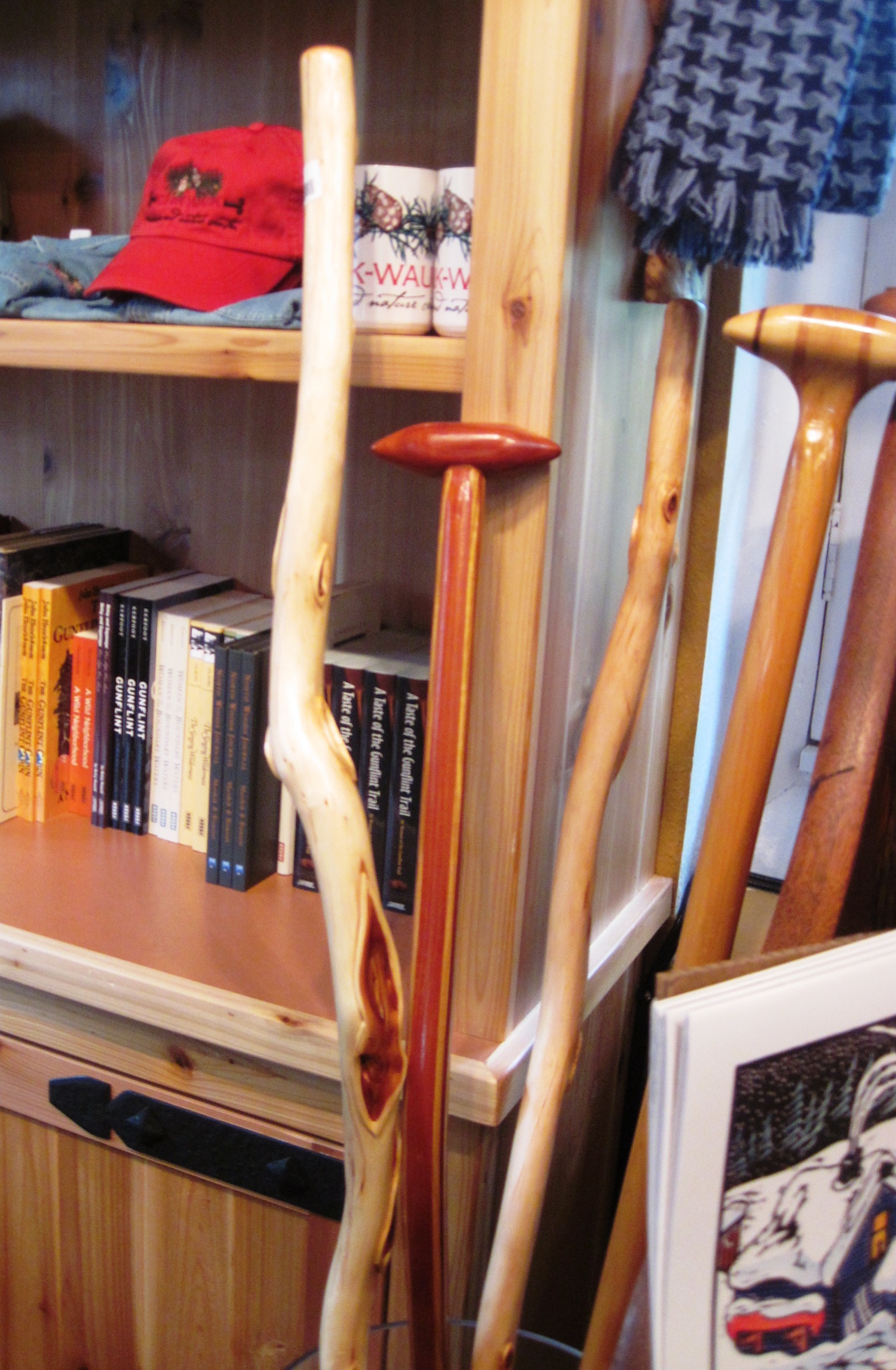
The Gunflint Trail is gifted with many artists and craftsmen. In Chik-Wauk Museum you can see the work of two woodworkers who work mainly with diamond willow: Ken Lind and LeRoy Ullrich. Ken stripped all the diamond willow you see in the museum’s exhibits and he’s also the crafter of beautiful diamond willows lamps, some of which are available in the Chik-Wauk gift shop.
Meanwhile LeRoy crafts a wide variety of diamond willows including walking sticks, salt and pepper shakers, and candle holders.
Diamond willow isn’t a specific type of tree. Rather, “diamonding” forms on willow trees which have been affected by a fungus called valsa sordida. This fungus causes diamonding on at least 5 willow species. Here in northern Minnesota, the most common willow species is salix discolor. You might know it as pussy willow. Carvers take branches of this tree, which you’ll find near wet areas, strip off the gray bark, carve out the diamonds, and polish the pieces.
If you’d like a bit of diamond willow to take home with you, the Chik-Wauk Museum Gift Shop is a great place to stop.