Date Comments 1 Comment

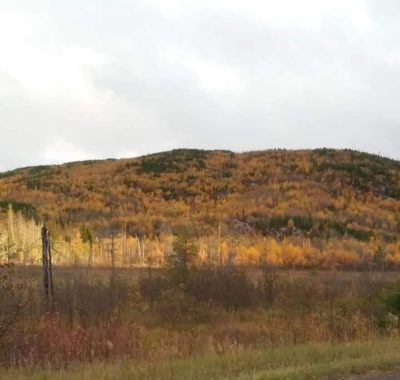
A View from Blueberry Hill

Click the photo above for a panoramic shot of the view from Blueberry Hill. Even when you enlarge the photo, the photo doesn’t do the view justice. On Blueberry Hill you find a 360 view of the upper Gunflint Trail. You catch glimpse of Seagull Lake, Saganaga Lake, the Granite River, and the surrounding granite hills.

Blueberry Hill is located on the Gneiss Lake Trail, a 1.5 mile (one-way) trail which once ran from Chik-Wauk Bay to the Granite River. The trail has been closed since 1999 when it suffered severe damage in the July 4 Blowdown storm. In 2007, the Ham Lake Wildfire burned through the trail area, burning a large amount of the fallen Blowdown trees and making it possible for people to begin considering reopening the Gneiss Lake Trail to hikers.

This winter, the U.S. Forest Service gave the Gunflint Trail Historical Society permission to clear and maintain the Gneiss Lake Trail to Blueberry Hill, which is located about half a mile up the Gneiss Lake Trail. While the Ham Lake Fire did a fairly good job of clearing the trail area, after more than a decade without use, there is a significant amount of work which must be done before the trail can be reopened to the public. Last summer, volunteers ventured down the very obstructed path a couple times with GPS to flag the trail.  Now that the path is flagged, the very large project of clearing the trail of dead fall, hazardous trees, and undergrowth can begin.

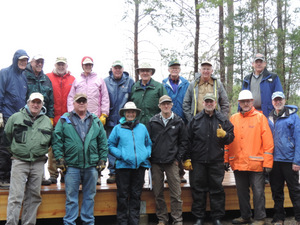
You can assist with clearing efforts by taking part in this year’s Gunflint Green Up.  Held May 3-6, this will be the fifth annual Gunflint Green Up. The Green Up has provided an opportunity for people to gather at the end of the Gunflint Trail to plant trees in the wake of the Ham Lake Wildfire. This year’s Green Up will focus on planting trees along the Gneiss Lake Trail as well as clearing the Gneiss Lake Trail to Blueberry Hill. We’d love to have you lend a helping hand!
We hope to have this new trail open by the start of this summer season. The trail will be accessed off of the existing Big Sag Trail on Chik-Wauk Museum and Nature Center grounds.  The Blueberry Hill trail will add an additional mile of trail to Chik-Wauk’s hiking trail network.  We’re excited to have a longer distance trail to offer visitors and, as the name implies, the trail will open up a spot to bring your berry buckets to in July and August.

Date Comments No Comments

Chik-Wauk Museum’s Artifacts

Since its formation in 2005, Gunflint Trail Historical Society has been collecting artifacts of historical significance to the Gunflint Trail. Those artifacts now make up the displays at the Chik-Wauk Museum and Nature Center.

The opening of Chik-Wauk in summer 2010 marked a slowing in the GTHS’s artifact acquisition.  Due to limited space, the GTHS is unable to accept further artifact donations at this time. However, this doesn’t mean that your artifact won’t have a home at Chik-Wauk. We’re simply unable to accept further artifacts without first developing a plan for how the GTHS will use your artifact. We are still very interested in your artifact and ask anyone contemplating an artifact donation to the GTHS to complete and submit the “Artifact Donation Form” below:

Artifact Donation Form

One thing we can never have enough of are photographs.  We always welcome your donation of any historical Gunflint Trail photos you may have in your possession. These photographs make up an invaluable part of our archives and will be used in future exhibits at Chik-Wauk as well as be made available to outside researchers.

Thanks to digital technology, we don’t need your physical photographs. We welcome digital scans of your photos – just send us a disc or share through Picasa — if you prefer to hang onto your originals. We’ll happily scan your old photographs and return them to you too, if that’s easiest for you.

You are welcome to place restrictions on the use of any photographs you share with the GTHS. For example, you might request that all photos be credited to you when used in exhibits or that you be contacted to grant permission before any of your photographs are used. The GTHS uses PastPerfect museum software to organize photos and artifacts as well as track photos and artifacts’ usage and restrictions.

The Gunflint Trail Historical Society can only present a history as complete as the resources it has at its disposal. We invite you to contact us about any artifacts or photographs you’d like to share with GTHS. If you have questions, please email us at info@chikwauk.com. We’re happy to answer any questions you might have!

Date Comments No Comments

Dog teams on the early Gunflint Trail

If you lived on the Gunflint Trail in the early days, chances are you owned a dog team.

Bob Spooner, who grew up on Magnetic Lake, remembered in an interview with the Gunflint Trail Historical Society that he “took care of the dogs from when I was knee high to a grasshopper.”

For early settlers on the Gunflint Trail, such as Charlie and Petra Boostrom, who settled year-round on Clearwater Lake in 1915, dog teams were an important means of transportation during the winter months. Harriet Taus, daughter of  Charlie and Petra, recalled that her mother would hook up the dog team on beautiful winter days, load her children into the dog sled, and travel over Hungry Jack Lodge to pick up the mail.

Justine Kerfoot of Gunflint Lodge, used her dog team for chores such as hauling firewood. She would also occasionally give guests dog sled rides. As handy as the dogs were during the winter, they also required a lot of food, a fair amount of time had to be devoted to maintenance of their harnesses and sleds, and they didn’t exactly earn their keep during the summer months.

In Woman of the Boundary Waters, Kerfoot wrote: “Raising dogs and running a resort sometimes created opposing problems. In the summer the dogs were not worked and chafed for a run. Guests invariably wandered among them so it was paramount we not have a vicious dog in our string. It was essential they stay quiet at night and not disturb the guests, but when a bear came near, they created an uproar.”

Snowmobiles, which began gaining popularity in the 1950s, would eventually replace most dog sled teams on the Trail, despite Justine Kerfoot’s astute observation that, “You never walked home with a dog team.”

Although they’ve lost most of their practical application these days, dogs are still kept on the Gunflint Trail. A dog sled ride with one of the beloved dog teams at one of the Gunflint Trail’s resorts offers residents and visitors to the area a taste of what life was once like in the Minnesota wilds.

The Gunflint Trail will be hosting some sled dog action this week with the 100 mile Gunflint Trail Mail Run Sled Dog Race which takes off from Devil Track Landing on Monday, January 30 at 4 p.m.  Whether as transportation or racing, sled dogs continue to play a pivotal role in Gunflint Trail history.

Date Comments No Comments

Looking forward to the 2012 season

Since opening in July 2010, Chik-Wauk Museum and Nature Center has striven not only to be a quality history museum, but also to provide both Gunflint Trail residents and visitors with interesting, in-depth, and timely presentations, talks, and demonstrations centered on the Gunflint Trail’s nature world.  Chik-Wauk began hosting the U.S. Forest Service ranger presentations of the “Becoming A Boundary Waters Family” program in summer 2010. Last year, Chik-Wauk developed its own naturalist series, the well-attended Sunday Nature Walks and Talks presented by local naturalists. These programs are offered at no additional cost to Chik-Wauk visitors.

In 2012, we’d love to further expand programming to include more kids activities, history talks, and more.  But to ensure that a sustainable program is developed,  we need to make sure we’re meeting our visitors’ needs. We’d so appreciate it if you’d take this short 10 question survey regarding further developments of Chik-Wauk Museum and Nature Center public programming. Your feedback will directly help shape the future of Chik-Wauk’s naturalist and history programming offerings. We’d love to hear your thoughts!

On a related note:

Are you a naturalist? Are you a history buff with extensive knowledge of  a topic pertinent to northeastern Minnesota? If you’d be interested in presenting at Chik-Wauk Museum and Nature Center during the 2012 season  please drop us a line at info at chikwauk dot com for more details. We’d also love to hear from you if you’re interested in assisting with or coordinating kids activities during the summer months.
Thank you all for your feedback!

Date Comments No Comments

Trail Wildlife

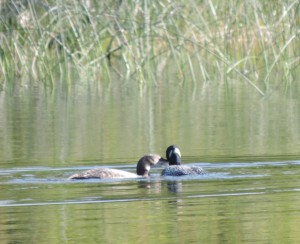
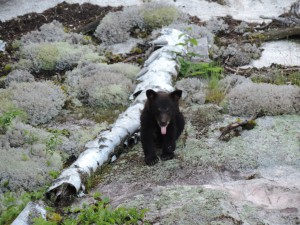
A couple recent posts about wildlife on the Gunflint Trail from Steve Ramberg and Sue Prom got us thinking about the role wildlife’s played throughout Gunflint Trail history. The Gunflint Trail has always been a wild place where humans and wildlife often cross paths.  Historically, wildlife have provided Gunflint Trail residents with a livelihood, food, and many, many good stories.  In Chik-Wauk Museum and Nature Center’s own short history, we’ve had several encounters with moose, foxes, loons, turtles, and more.  One of our favorite run-ins with wildlife came this past June when Mama Moose and her two calves decided to take an after lunch stroll on Chik-Wauk’s nature trails. (See above photo.)

Here are some of our favorite wildlife stories from the Gunflint Trail historical archives:

In Janna Webster’s Ki-osh-kons: people, places and stories of Seagull Lake, Webster described how Gunflint Trail doyenne and owner of several Gunflint Trail businesses, Eve Blankenburg could predict bear trouble, much to the dismay of her husband, Russell: “[Eve] was able to accurately predict when they would have bear trouble at the resort. She would occasionally announce, ‘We are going to have a bear tonight.’ It just about did Russell in that Eve could do this. Eve never did tell him that her clairvoyance was due to the fact that, without fail, they would get a visiting bear anytime she cooked a ham.”

Sue Kerfoot remembered in The Gunflint Lodge Cookbook, a hair-raising experience with wolves one winter during her early days on Gunflint Lake: “I was home alone with only our dog, Itzy, for companionship. My city fears of being alone at night were coming to the surface. Itzy was really restless. She kept getting up to look out the window. The fur would stand up on her neck. I let her out. Then she wanted in. Five minutes later it was out again. The outside flood light was on. I couldn’t see anything except deep shadows. Finally I stepped outside to see if I could hear anything. There was a pack of wolves very close to the house. Their howling sounded like it was right next to me. A chill went down my spine. I stepped back into the house and called Itzy in. For the next few minutes I sat inside and tried to convince myself that it was silly to be afraid. What could the wolves do to me? I was inside; they were outside.”

Wildlife of any size can create quite the impression. Paula Beattie remembers one incident while operating Moosehorn Lodge (now Cross River Lodge) in A Taste of the Gunflint Trail:  “I was painting the kitchen when I heard a noise. I peeked around the corner into the dining room and saw nothing. I inched my way toward the living room. The noise of something wildly moving around was getting louder, and then I saw it: a DUCK! It was flying around the room crashing into windows, which is pretty much the whole front of the lodge. I was relieved, but then I had to get him out. “ Eventually, Beattie would get the duck out of the building, but it proved to be just the beginning of many wildlife encounters during her time on the Trail.

You can read more personal tales of wildlife encounters in the local resident book located in Chik-Wauk Museum and Nature Center’s reading corner.

What are some of your favorite Gunflint Trail wildlife stories?

Date Comments No Comments

Helen Hoover: Gunflint Trail author

The Gunflint Trail landscape has inspired many works of literature. Perhaps best known are Justine Kerfoot’s autobiographical books, but John Henricksson, Florence Jaques, and others have also written at length about the Gunflint Trail region. One author whose works you may have bumped into this Christmastime is Helen Hoover.

Hoover spent several years living in a small cabin on the south shore of Gunflint Lake with her husband, Adrian. The couple made the move from Chicago to the Northwoods in 1954. Helen, who had a degree in chemistry from the University of Ohio, left behind a successful career as a metallurgist; Adrian had been an art director. The move to the Gunflint Trail was motivated by the two’s desire to live closer to nature, but the move proved financially difficult. Without a steady income and nearly 50 miles removed from the nearest town of Grand Marais, the Hoovers struggled to survive that first harsh Minnesota winter.

To made ends meet, Adrian began selling cards he illustrated and other handmade trinkets. Helen started writing magazine articles. In 1963, her first book, The Long-Shadowed Forest, which recounted life in northern Minnesota, was published by Alfred Knopf. She would publish three more Gunflint Trail inspired books with Knopf: The Gift of the Deer (1966), A Place in the Woods (1968), and The Years of the Forest (1973). These books are still in print and today are published by the University of Minnesota Press.

At least two of Hoover’s books featured a seasonal theme. Her book, The Gift of the Deer tells the story of an emaciated deer who comes into the Hoovers’ backyard one Christmas eve. The Hoovers nursed the deer, who they called Peter Whitetail, back to health. In her children’s book The Great Wolf and Good Woodsmen, Hoover tells the story of the woodland creatures rallying to help an injured woodsmen on Christmas day. The Great Wolf and Good Woodsmen was republished in 1997 accompanied with woodcut illustrations by Grand Marais Betsy Bowen.

Eventually, the Hoovers sold their Gunflint Lake property and spent time in New Mexico before resettling in Wyoming. Helen died in 1984 at age 74 in Laramie, WY.

At Chik-Wauk Museum and Nature Center, you can view a display devoted to Helen Hoover in the reading corner. In the display, you’ll see some of the handcrafted goods Adrian made, first editions of Hoover’s books, and personal letters between Helen and Heston’s Lodge owner, Peggy Heston.

Date Comments No Comments

Seasons Greetings!

Click on image to enlarge:

Date Comments No Comments

Holidays On the Trail

The holiday season has always been one of the most enchanting seasons on the Gunflint Trail. With snow-capped trees, snowshoe and ski trails winding across frozen lakes, and snowbanks framing the road, a Gunflint Trail holiday has distinct storybook qualities.

One thing that’s sure to be covered during holiday conversations is the weather,  be it snowfall or the recent winter temperatures.

In A Taste of the Gunflint Trail John Patten remembers the early days of Adventurous Christians in the mid-Trail area were especially chilly:

Our first winter in the lodge was an adventure. It wasn’t far into December when the lack of cash flow caused us to abandon use of the propane heater and we relied completely on the wood stove to “heat” the entire lodge. It was no joke among staff members that you’d best hold your fork in your armpit a minute or two before inserting it into your mouth at breakfast, or it would freeze to your lips. We had a neighborhood Christmas Eve service that December, and upon apologizing for the lack of heat to all service attendees, Harry Nolan [owner of Sunset Point on Hungry Jack Lake] responded with an immediate “What heat?!”

On the other side of the spectrum, Florence Page Jaques recalled being shocked to find balmy temps on Christmas day during the winter she  spent with her husband, Francis Lee Jaques, on Gunflint Lake in the early 1940s. In her book Snowshoe Country, she wrote “It is thirty above! Scandalous! This isn’t the Christmas weather we are supposed to endure!”

No matter the temperature, getting the annual Christmas tree remains an important tradition for many Gunflint Trail families.

Florence Page Jaques remembers the search for the perfect Christmas trees  in Snowshoe Country:

At sunset Bruce [Kerfoot] and Lee and I started up the cliff trail to get a Christmas tree. It was a delight to have such thousands to select from, but almost impossible to choose among them. On a ridge we found a beauty, and I begged a tiny one besides. I’ve always wanted to have a Christmas tree for birds. Coming down, the spicy air and the great snowy landscape were so inspiriting that Lee and I surprised Bruce by bursting into carols. The lake was a giant mosaic in pastel colors as the sunset reflected on various surfaces. It was as if a rainbow had been shattered there.

Carlene Soderberg Krumpack, daughter of Carl and Elinor Soderberg who owned Soderberg Cabins, remembered in Taste the Christmas trees her family had in the late 1940s:

Our first Christmas tree had candles in candleholders that my mom bought. It was beautiful. The next Christmas my dad hooked a string of lights up to a car battery.

Marilyn Sly, a seasonal Gunflint Trail resident, remembered the Christmas she and her young family spent on the Gunflint Trail in a interview with the Gunflint Trail Historical Society. During their time on the Trail, the family  made their own decorations, strung popcorn and cranberries, cut down a tree, and attended a Christmas service at Okontoe around a potbelly stove.  “It was one of the most beautiful Christmases,” Sly said.

Do you have holiday memories from the Gunflint Trail? Be sure to share them in the comments.

Date Comments No Comments

The longest bus ride in Minnesota

Is a school bus an important piece of history? If you live on the Gunflint Trail, then yes!

Schooling always presented a problem for Gunflint Trail families. Through the 1940s, children were sent to Maple Hill School, just outside of Grand Marais for their elementary schooling, boarding during the school week with area families close to the school. Eventually the Maple Hill school closed and homeschooling or boarding their children in Grand Marais during the school week was the only option for Gunflint Trail parents, although for a brief period of time, from 1946-1948, Grace Boissenin operated a one-room schoolhouse on Clearwater Lake for Gunflint Trail children.

Cheryl Dailey, daughter of Al and Mary Hedstrom, who owned End of the Trail Lodge on Saganaga Lake through 1965, remembered in an oral history interview with the Gunflint Trail Historical Society the experience of boarding in Grand Marais during the school week: “We’d pack our suitcases Sunday night and so however we got to town over the years, the school bus, Bud Kratoska [owner of Trout Lake Resort] used to come all the way up for us on Monday morning and we’d take our little suitcase and the suitcase would sit at the front of the bus, you know, right where you’d get into the bus and then we’d walk our suitcase down to wherever we were going, you know, staying, and then on Friday morning, we’d have our suitcase packed up and we’d go home.”

Jean Dailey of Seagull Resort drove the school bus from the late ’50s  through the mid 60s. She said in A Taste of the Gunflint Trail:  “It was quite a task to drive the Trail in the winter. Of course, it was not paved at that time. Many mornings I had to get up early to put an electric heater under the motor to get the bus going. It was often like driving in a tunnel as the snow was so deeply piled on the sides of the road.”

In 1960, when the Marks and their three daughters moved into Tuscarora Lodge, the bus began making daily trips up and down the Trail. Marie Mark remembered in Taste: “Joe [the bus driver] said he would retire when the last of the Mark girls graduated from high school. When we went out to meet the bus on that last day, it seemed to be pulling in slower than usual. To our surprise Lindy [our youngest] was driving the bus and Joe was sitting in a back seat.”

Heading to school remains an adventure for Gunflint Trail children, one that’s been highlighted in both an article by the Duluth New Tribune in 1988 and a feature by MPR in 2010. During a single school year, Gunflint Trail kids will spend 14.5 days on the school bus!

Date Comments No Comments

Have a Merry “Chik-Wauk”

Racking your brain for the perfect holiday gift? For the Northwoods lover on your gift list, consider some Chik-Wauk Museum and Nature Center apparel this holiday season.  Thoughtful and functional, gifts selected from Chik-Wauk’s gift shop support the efforts of the Gunflint Trail Historical Society and help sustain Chik-Wauk Museum and Nature Center.

This holiday season we’re pleased to offer:

Chik-Wauk Museum and Nature Center Clothing
$16.95 – 39.95

Embroidered t-shirts and sweatshirts feature Chik-Wauk’s snazzy jack pine logo. We also have forest green hooded sweatshirts with the retro Chik-Wauk lodge logo, silkscreened “Chik-Wauk on Mighty Saganaga” red t-shirts, and a selection of ball caps. Please note: we have limited sizes and colors available. Consult the order form (below) for more details.

Don’t want to guess sizes? These gifts always fit.
Chik-Wauk Drinking Glass $10.73

With this 16 oz drinking glass you can serve Santa his milk in style this Christmas Eve.

Chik-Wauk Museum and Nature Center Mug $15.05

This generous sized mug holds 20 oz of coffee, soup, or your favorite holiday season warm beverage.

A Taste of the Gunflint Trail cookbook $21.52

A great cookbook and a history lesson to boot. This tome provides the most comprehensive overview of Gunflint Trail history out there. Equally enjoyed by both men and women!

To order, simply complete our Mail Order Form and submit with check payment to the address indicated on the form. (Sorry, we can’t handle credit cards during the off season.) All questions should be directed to info@chikwauk.com.

Happy holidays and happy shopping!

Older Posts »

Website by Katherine Hellner and Boreal Access